
Ridge pointing that holds the capping where it belongs
On a tiled roof, pointing is the mortar line along the ridges and hips. When it cracks or lets go, water can track under the capping and the tiles start to move. Repointing puts that line back.

A small detail that does a large job
Ridge and hip tiles sit on a bed of mortar, with a pointing line along the edge. That pointing is what you see from the ground, and it is part of what keeps water out from under the capping. Over time it shrinks, cracks, crumbles and eventually lets go - especially on older tiled roofs around Melbourne.
Repointing means cutting out the pointing that has failed and applying new, flexible pointing. Where the bedding underneath has also gone, the capping is re-bedded first. The work is precise, but the idea is simple: put the ridge back into a condition that will actually hold.
Repointing is often done on its own when the rest of the roof is sound. It is also a core stage of most tiled-roof restorations. Cracked pointing does not always mean the whole roof needs coating or replacing - that is a separate question.
Signs your ridge pointing may need attention
These are things you can often see from the ground. They may indicate the pointing needs assessment - they are not a guarantee that the capping has failed.
- Cracked ridge pointing A visible split along the mortar line, sometimes running for several tiles, sometimes in short sections.
- Crumbling or missing mortar Pointing that has dropped into the gutter, or gaps where the mortar has weathered away.
- Movement around ridge tiles Capping that no longer sits true, looks lifted, or has shifted after weather.
- Water marks near a ridge line Staining internally that lines up with a hip or ridge. The pointing may be involved - the roof still needs to be looked at.
- Ageing mortar that has gone brittle Old cement pointing that has lost its grip, even if it has not fully fallen away yet.
What roof repointing involves
The work is concentrated along the ridges and hips. How much of that line needs doing is what the assessment is for.
Failed pointing is cut out. Where the bedding under the capping has failed as well, the ridge tiles are lifted, re-bedded and then repointed. New pointing is a flexible compound rather than a brittle cement mix, so it can move a little with the roof instead of cracking straight away.
Not every crack means the whole ridge must come off. Some sections only need the pointing renewed. Some need the capping reset. We will describe which you have rather than defaulting to the larger job.
If the tiles, valleys or surface also need work, repointing can sit inside a restoration. If they do not, there is no need to coat the roof in order to justify the pointing.
- Ridge and hip lines inspected
- Failed pointing cut out
- Capping re-bedded where the bedding has gone
- Repointed with flexible pointing
- Site cleaned of old mortar
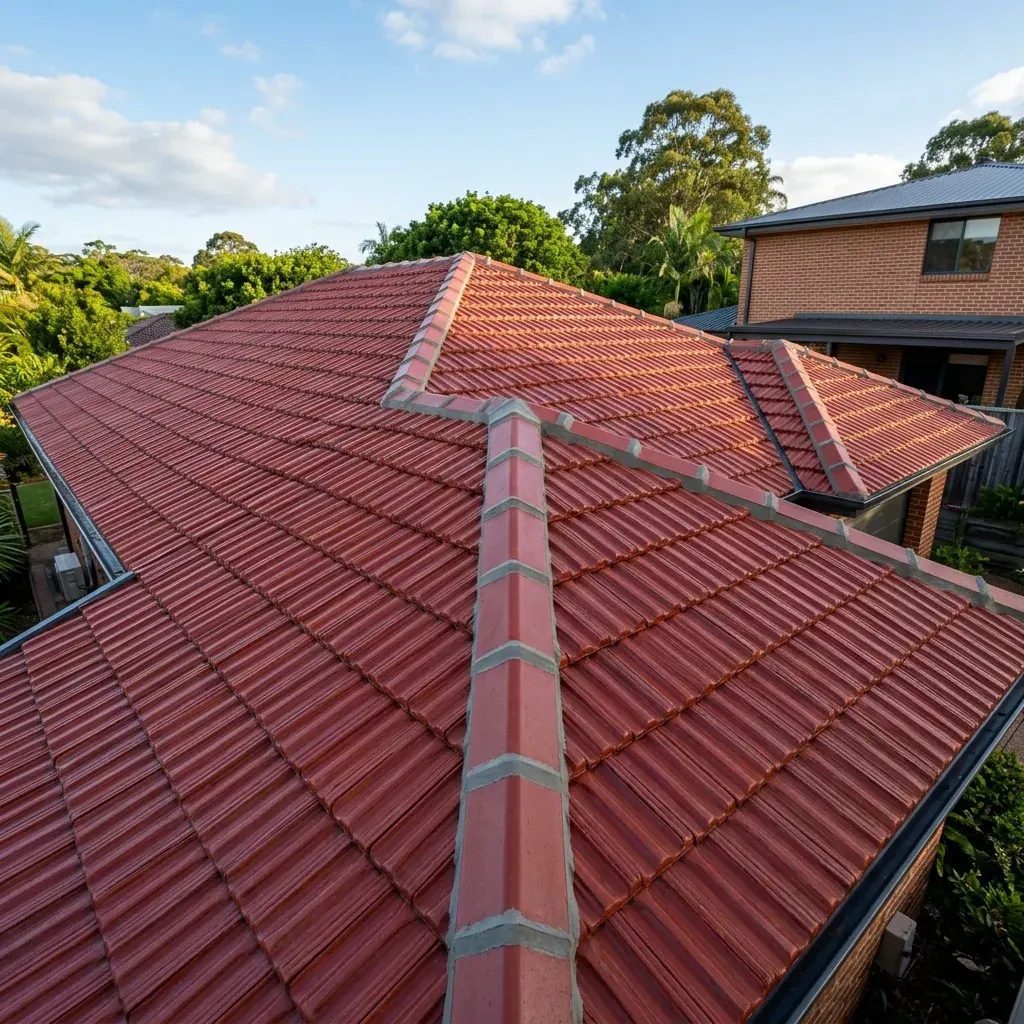

Pointing on the roof, and the finished line
The work happens along the ridge. The test is a continuous, tooled line once it has set.
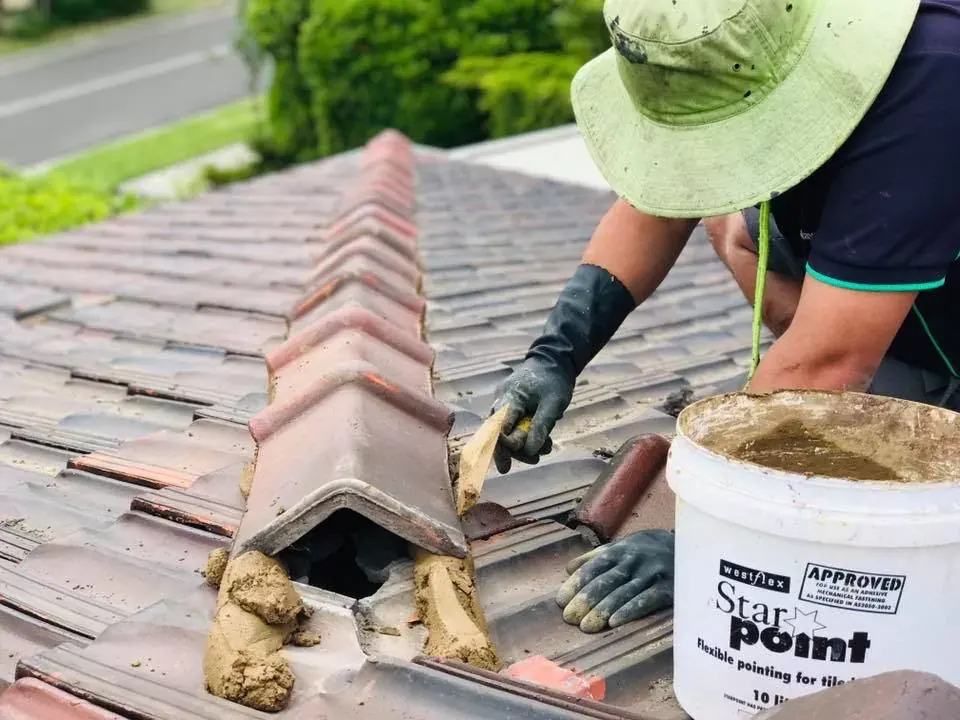
Inspect the line, then renew what has failed
The work follows the ridge, not a generic roof treatment.
Why choose Kestrel for repointing
Repointing is a craft step inside a lot of our restoration work. It is also a job we are happy to do on its own.
Re-bedding and flexible pointing are part of how we restore tiled roofs, not an add-on we subcontract by default.
If the pointing failure is one part of a tired roof, we can restore the rest. If it is not, we will not invent extra work.
Hands-on pointing and capping work, including on roofs where the mortar is the thing that has actually failed.
Cover in place before we work along the ridge. One point of contact for the job.
Ridge and tiled-roof detail
Frames show pointing in progress, a finished ridge line, and weathered tiling where mortar has aged.

Related roofing services
If this is close but not quite the work you need, these are the usual next pages to look at.
Questions about roof repointing
If the answer you need is not here, call and ask. We would rather explain it than have you guess.
Need your roof repointed?
Describe what you can see along the ridges. We will look at the capping, explain whether pointing, re-bedding or wider work is required, and quote accordingly.